
Built by artisans.
Not by a lab.
Craft beer had its revolution. Coffee had its revolution. Cocktails had theirs. Energy never did — until now. This is the story of why Famus exists.
Energy drinks
learned from soda.
For decades, energy drinks have been built on the philosophy of soda manufacturing: the cheapest possible ingredients, artificial colors, artificial flavors, and commodity formulas tuned for efficiency and margin. Consumers never asked for any of it. When the spreadsheet writes the recipe, the recipe serves the spreadsheet.
We know, because we drank them anyway. We're the kind of people who are up before the sun and still going well after it sets — and we were tired of what those drinks did to us. The crash. The jitters. The ingredient panel you'd rather not read too closely.
- ✕Cheapest possible ingredients
- ✕Artificial colors
- ✕Artificial flavors
- ✕Commodity formulations
- ✕Manufacturing efficiency
- ✕Better margins
- —Real juice, real flavor
- —Ingredients chosen because they're better
- —Recipes that start at the bar
- —Taste worth savoring
- —Craft over efficiency
- —Quality over margins
So we asked a
different question.
We didn't set out to make a slightly better energy drink. We started from a completely different philosophy — one borrowed from restaurants, cocktail bars, chefs, and artisans. In that world nobody asks "how cheaply can we make it?" They ask "how good can we make it?"
So we took matters into our own hands. We brought in friends who knew the beverage space inside and out, and worked the formula until it earned the word ultra-premium: real juice, natural caffeine, ingredients chosen because they're better — not cheaper. A real lift with no crash and no jitters. And because every flavor starts as a cocktail, it had to taste great straight from the bottle and poured over ice with your favorite spirit.
The package had to hold up its end too. A solid aluminum bottle that feels substantial in your hand, with a resealable top that keeps your drink fresh — pour some now, save the rest for later.
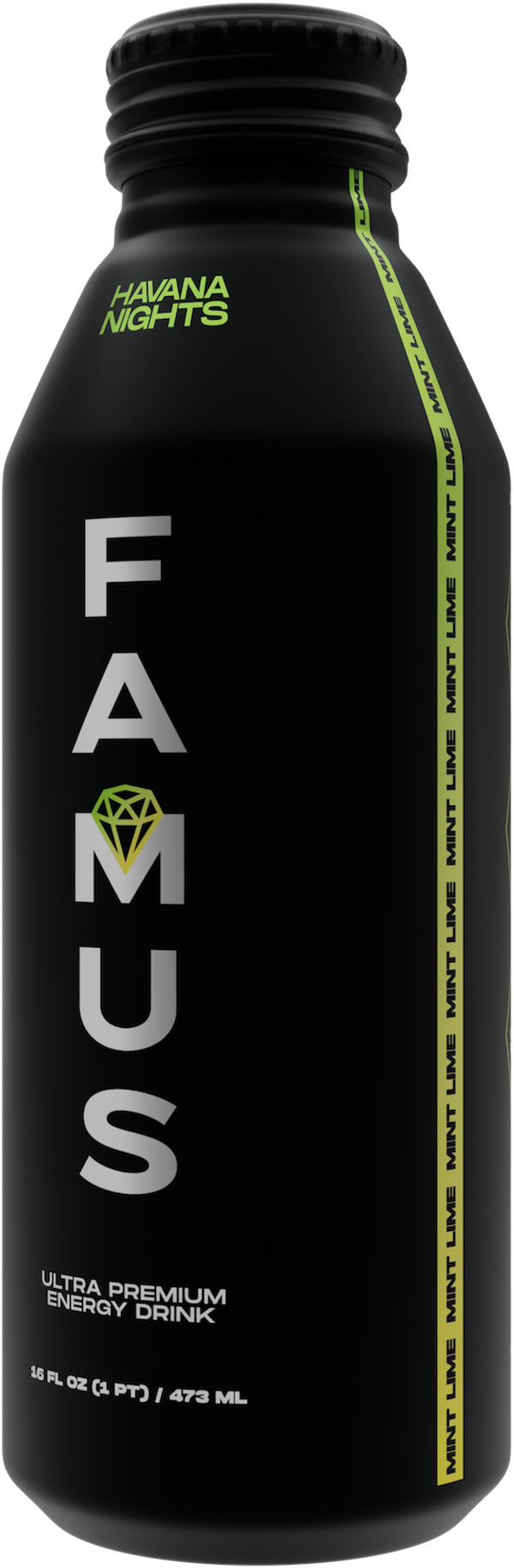
Every ingredient has to earn its place.
One sentence guides every decision we make. If an ingredient improves Famus as an elevated beverage — without compromising the person drinking it — it stays. Everything else gets cut. No exceptions for cost, convenience, or what the rest of the category does.
It was supposed
to be just for us.
When we finally poured the finished formula for family and friends, they all wanted in. Fine — we'd run one small batch and share it with the people who live like we do.
Turns out there's no such thing as a small batch. Bottling runs are measured in pallets, not cases. So the private stash became a brand — and what started as a drink for a few guys who refused to settle became Famus, for everyone who lives life to the fullest and demands better than the category has been serving them.
Three careers.
One conclusion.
Jeremy
Spent years inside beverage manufacturing and saw exactly how the category gets made — which corners get cut, and why, long before a bottle ever reaches a shelf.
Lee
Came up through hospitality — restaurants, bars, service. In that world there's only one question worth asking about anything you serve: how good can we make it?
Chuck
The one who protects quality when the spreadsheet argues for margins. Every ingredient that costs more than it has to is in the bottle because Chuck wouldn't budge.
Three different careers. One conclusion: the energy drink category didn't need another brand. It needed a different philosophy.
Famus Energy.
Yes, it's a play on famous. But it was never about being known — it's about living your best life. Healthy. Social. With the energy to make the most of every day, and every night. That's the whole idea, and you're invited.